A sign is not consent in itself.
If you rely on consent to use images, it must be freely given, specific, informed and unambiguous. Silence or a guest’s failure to object is not enough.
Source: Danish Data Protection Agency guidance on consent, section 2.6.
Information is not the same as a yes
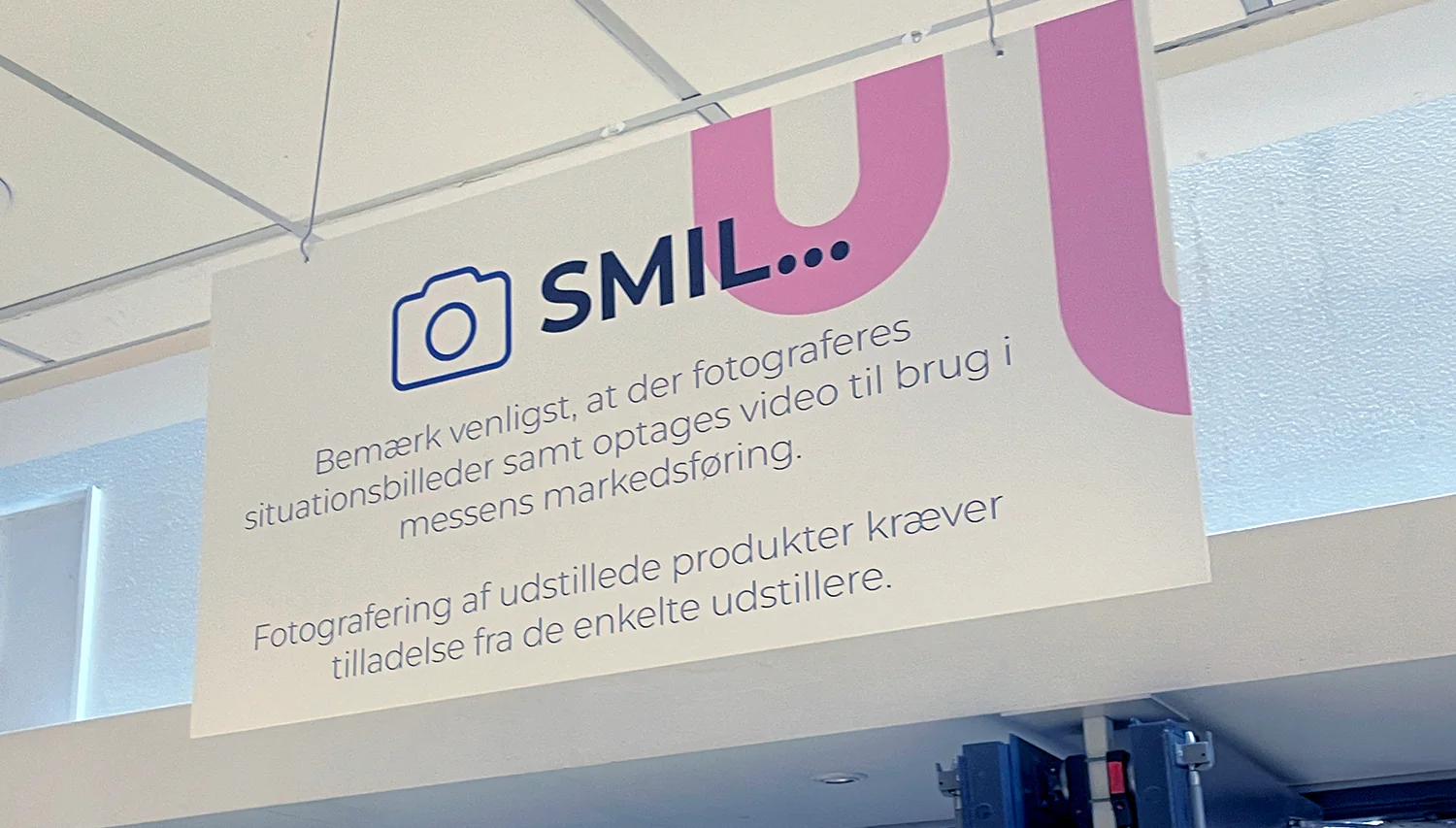
During a visit to Byggeri 2025 at Messe C in Fredericia, Denmark, we noticed the sign in the photo. It told guests that photos and video were being taken for the exhibition’s marketing.
It prompted a question many organisers recognise: When is information enough, and when do we actually need to ask for consent?
“We are taking photos” is a notice.
“Yes, you may use my photo” is a choice.
What is often called opt-out consent reverses the logic: the guest is expected to object. But an opt-out system cannot replace active consent when consent is your legal basis.
A sign can form part of the information provided to participants. The photo alone does not tell us how else the organiser informed guests or which legal basis was used. This is therefore not an assessment of the legality of that particular exhibition’s practices.
Do all event photos require consent, then?
No. Consent is one of several possible legal bases. Choose the appropriate basis before taking and using the photos – not only when someone complains.
The Danish Data Protection Agency no longer makes a general distinction between portraits and situational images when assessing online publication. The image, context and purpose matter. Calling something a “situational image” is not automatic permission to publish it.
Source: Danish Data Protection Agency: Changed practice on images online.
A specific balancing of interests may be relevant in some situations. It must be genuine and take the people featured into account; it does not arise simply because there is a sign at the entrance.
Read the guide: When do you need to collect consent? →Keep it simple for guests and photographers
Plan the workflow with the people who will capture and use the material. Here are four practical steps for your next event:
- Clarify the intended use before the eventCreate a shoot plan specifying purposes and channels. Distinguish, for example, between coverage of the day and material for a later advertising campaign.
- Make information easy to findUse invitations, your website and clear signage to explain the photography and show guests where to find further information.
- Collect an active yes when relying on consentGive people information and a genuine choice before the shoot. A link or QR code can make the form easy to open on a phone. During event registration, the choice about photography should be clearly separate from registration itself.
- Make the agreement useful after the eventAgree how the photographer and communications team will find the consent record and check permitted uses. A colour marker on a name badge can help on the day, but does not replace documentation.
Also consider photos of details, products or surroundings where people cannot be identified. However, a photo taken from behind is not necessarily anonymous.
From information to documented consent
PhotoConsent can support the part of the process where you collect and manage consent. Share the form via QR code or link and keep the records together so the team can find them again.
This does not replace assessing which legal basis fits the project. But once you have chosen consent, a shared digital process makes agreements easier to manage.
Plan for consent before the camera starts
Get a short review of your workflow and see how PhotoConsent can help collect and organise consent.
Get a free consent checkSee how PhotoConsent works →Adapted from PhotoConsent’s LinkedIn article dated 22 April 2025. General information, not legal advice on specific circumstances.
Read also: Verbal consent is easier. Or is it?